 Battersea House Clearance — Recycling and Sustainability Commitment
At Battersea house clearance we place eco-friendly waste disposal area practices at the heart of every job. Our approach to recycling and sustainability for house clearances in Battersea and surrounding boroughs combines careful sorting, verified reuse channels and continual emissions reductions. We aim to be leaders in creating a sustainable rubbish area model that other local clearances can follow.
 Why sustainability matters: household clearances produce a wide range of materials — from furniture and electricals to garden waste and mixed recyclables. We separate these on-site to maximise material recovery and minimise landfill. In line with local boroughs' approaches to waste separation (for example, food waste, paper, glass, metal and plastics are commonly separated across Wandsworth and neighbouring councils), our teams pre-sort to match civic amenity and transfer station requirements.
Our measurable target is central to every outcome: we have set an ambitious recycling percentage target of 70%+ by weight across all Battersea house clearance projects within the next two years. This target combines reuse, recycling and proper hazardous disposal, and is tracked per job to ensure continuous improvement. The target reflects practical ambition — high reuse rates for furniture and appliances, robust sorting for mixed recyclables, and safe handling of electronic and hazardous items.
How we deliver an eco-friendly waste disposal area
To reach our target we use a structured process: collection, on-site sorting, transfer to approved facilities and partnership-driven reuse. Key actions include:- Segregation at source: crews separate materials into clear streams to reduce contamination.
- Transport to local transfer stations: we use borough-approved household waste recycling centres (HWRCs) and transfer facilities to ensure correct downstream processing.
- Documentation: each load is logged so diversion rates can be reported and improved.

Local transfer stations and facilities
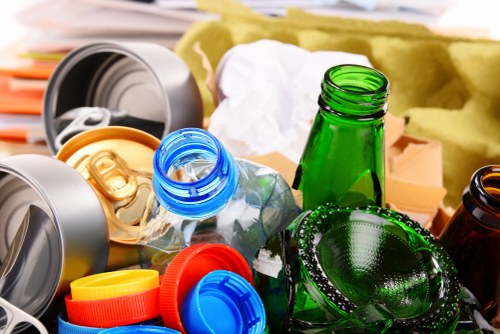
We work with local transfer stations and civic amenity sites run by the borough and neighbouring councils, directing sorted loads to the right place — whether that is a local recycling line for mixed packaging, metal recycling facilities, furniture reprocessing centres or authorised hazardous waste processors. Using licenced transfer points ensures materials enter established recycling streams rather than being misdirected.Examples of typical flows include: glass, paper and cans going to municipal recycling plants; wood and bulky items assessed for refurbishment; and electrical items routed to WEEE-approved processors. This mirrors borough programmes that encourage separation of food waste, garden waste, dry recycling and residuals.
We also prioritise local reprocessing where practical to reduce haul distance and embodied carbon in transport. This is a key part of creating a truly sustainable rubbish area — not just reducing landfill, but shrinking the carbon footprint of the whole waste chain.
Partnerships with charities and reuse networks
Our Battersea house clearance service maintains active partnerships with charities and social enterprises to divert usable items to good causes. We work with a mix of national and local organisations — charities that accept furniture, clothing, and working appliances — as well as smaller re-use projects in the borough that offer repairs and refurbishment training.These relationships deliver multiple benefits: reduced waste, social value through donations, and a sustainable route for items that would otherwise be discarded. We issue donation receipts and maintain records of items passed to charity partners so customers can see the social and environmental return of reuse activity.
Key charity collaboration outcomes:
- Increased reuse: furniture and appliances given a second life.
- Community support: items supplied to local families and projects.
- Reduced landfill tonnage: supports our recycling percentage target.
Low-carbon fleet and operational efficiencies
To build an authentic sustainable rubbish area we operate low-emission vehicles. Our fleet includes electric and hybrid vans and Euro 6 low-emission diesel models, chosen for payload efficiency and reduced urban emissions. We implement route optimisation and consolidated collections to cut mileage and emissions further, delivering cleaner clearances across Battersea and adjacent neighbourhoods.Fleet choices are matched to job types: smaller electric vans for flat-to-flat removals, and larger low-carbon vehicles for bulky clearances. Vehicle selection, combined with careful loading and reverse logistics (returning reusable items to charity partners on the same run), reduces both costs and carbon impact.
Operational transparency: we report fleet emissions reductions and diversion metrics alongside recycling percentages so clients and stakeholders can see the environmental performance of each clearance.
Policies, reporting and continuous improvement
We maintain an internal sustainability policy that sets out our recycling percentage target, procedures for using transfer stations, charity partnerships and vehicle emission standards. Regular audits and monthly reporting ensure performance stays on track and highlight opportunities to improve the eco-friendly waste disposal area in practice.Commitment to continuous improvement also means staying aligned with borough strategies on waste separation, adapting to new local recycling streams (for example added packaging types or revised food waste collection rules) and training crews in the latest best practice.
Our pledge: to keep developing a replicable model for a low-impact, high-reuse Battersea house clearance service that sets a practical standard for an eco-friendly waste disposal area and a resilient sustainable rubbish area in the heart of the city.